Ateliers IA pour universités, enseignants et étudiants
Donner à chaque public universitaire une manière pratique et responsable d’utiliser l’IA dans son travail.
Choisissez un parcours pour étudiants, enseignants, chercheurs, services, formation continue ou alumni. Chaque format associe outils actuels, pratique guidée, jugement académique et livrables adaptables après la session.
- Format recommandé
- Atelier ciblé · 4 heures
- Livraison
- En présentiel sur site, en ligne ou en hybride
01 · Idéal pour
Est-ce le bon atelier ?
Universités, écoles, équipes de formation continue et communautés académiques qui préparent un apprentissage pratique pour une cohorte définie.
Moins adapté si
- — Vous recherchez une solution logicielle terminée plutôt qu’une formation d’équipe.
- — Vous souhaitez une conférence passive sans mise en pratique.
- — Vous avez besoin d’une garantie juridique ou de conformité.
02 · Ce qui change après l’atelier
Ce que ce programme change concrètement
Une université a rarement un seul public IA. Les étudiants décident comment apprendre et déclarer leur usage, les enseignants repensent cours et évaluations, les chercheurs testent de nouveaux soutiens et les services examinent leurs workflows. Un bon programme campus respecte ces différences. AI Workshop commence donc par la cohorte et ses responsabilités, puis choisit les exemples, le niveau technique et les livrables adaptés à ce groupe.
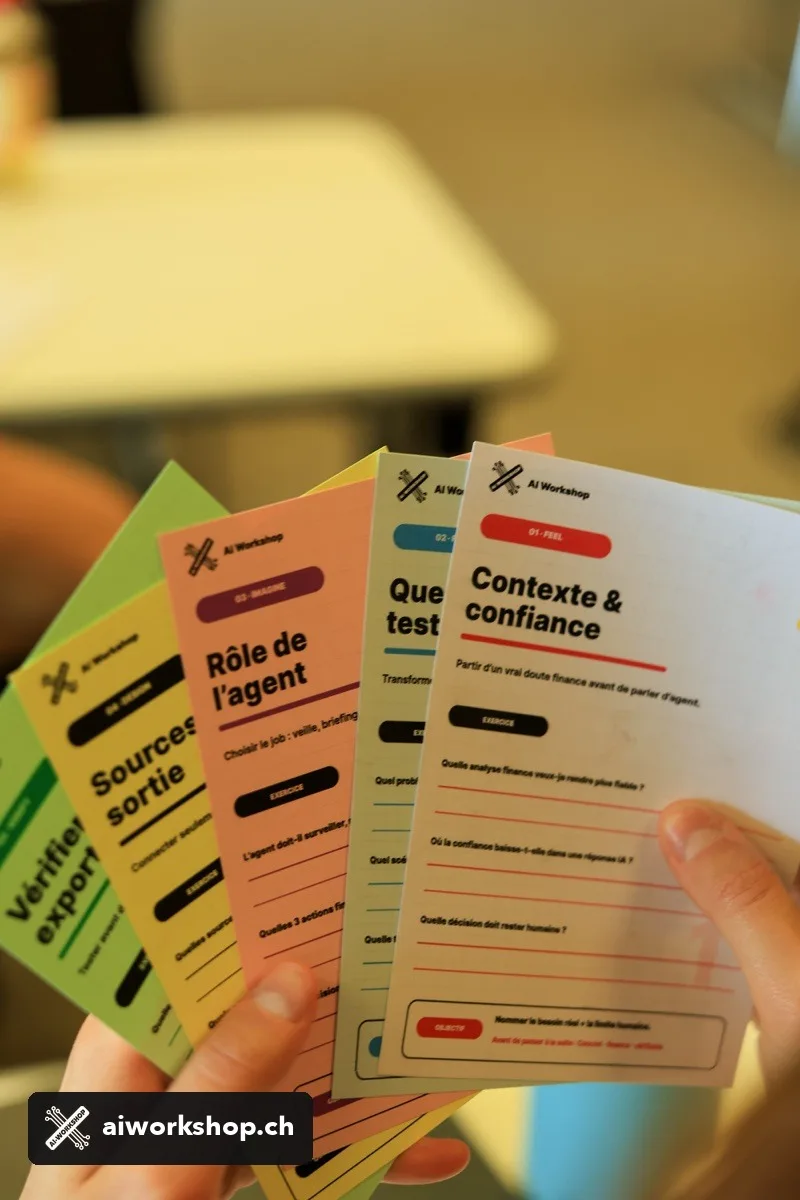
La session ne suit pas une suite figée de démonstrations. Le facilitateur travaille avec l’équipe sur Choisir le parcours, Comprendre les capacités actuelles, Pratiquer selon le rôle en utilisant ChatGPT, Agent Design Canvas, Vos outils IA approuvés, lorsque ces systèmes sont approuvés et disponibles. Les participants comparent les premiers résultats, rendent le contexte manquant visible et améliorent le travail ensemble. Ils comprennent ainsi non seulement quelle demande fonctionne, mais pourquoi un résultat est suffisamment fiable pour l’étape suivante.
La valeur ne doit pas s’arrêter à la sortie de la salle. Les exercices produisent donc des résultats concrets comme Cahier adapté au parcours, Guide d’usage responsable, Workflow ou brief d’agent adaptable. Ils donnent aux collègues un point de départ compréhensible, montrent où la vérification humaine reste nécessaire et rendent le prochain pilote plus petit et réaliste. Un suivi optionnel peut ensuite partir de ces artefacts plutôt que recommencer par une introduction générale.
- Choisir le parcours adapté à la cohorte
- Pratiquer des tâches liées aux rôles académiques
- Traiter intégrité, confidentialité et jugement humain
- Réutiliser guides et livrables après l’atelier
03 · Les outils que votre équipe utilisera
Les outils que votre équipe utilisera
- ChatGPT
- Rédiger, analyser, rechercher et transformer les tâches récurrentes en consignes réutilisables.
- Agent Design Canvas
- Définir la mission, les sources, outils, autorisations, décisions et contrôles humains avant de construire.
- Vos outils IA approuvés
- Les exercices s’adaptent aux systèmes, licences et règles de données approuvés par votre organisation.
04 · De l’incertitude à une méthode commune
Donner à chaque public universitaire une manière pratique et responsable d’utiliser l’IA dans son travail.
- Avant
- Les publics universitaires utilisent l’IA pour des raisons différentes ; une session générale change rarement l’enseignement, l’étude, la recherche ou les services.
- Pendant l’atelier
- L’équipe utilise ChatGPT, Agent Design Canvas, Vos outils IA approuvés sur ses propres exemples. Chaque exercice se termine par une vérification, une amélioration et une décision humaine claire.
- Dès le lendemain
- Les participants repartent avec plus que des notes : Cahier adapté au parcours, Guide d’usage responsable, Workflow ou brief d’agent adaptable et une prochaine étape convenue.
05 · Un programme pratique
Un programme pratique
01 Choisir le parcours
Aligner la session sur étudiants, enseignants, recherche, services ou formation continue.
02 Comprendre les capacités actuelles
Utiliser les outils disponibles dans l’institution et rendre leurs limites visibles.
03 Pratiquer selon le rôle
Travailler des scénarios d’enseignement, d’étude, de recherche ou de service.
04 Fixer des limites responsables
Traiter intégrité, confidentialité, transparence, vérification et responsabilité.
05 Réutiliser le travail
Créer guides, modèles et prochaines étapes pour la cohorte.
06 · Ce que votre équipe emporte
Un atelier préparé, pas une présentation générique
- Cahier adapté au parcours
- Guide d’usage responsable
- Workflow ou brief d’agent adaptable
- Plan d’étapes pour la cohorte
Préparation et ressources
- • Entretien de cadrage avec le sponsor
- • Court questionnaire participant
- • Exemples adaptés à votre travail
- • Pratique guidée en direct
- • Ressources numériques
- • Synthèse concise du facilitateur
Suivi optionnel: Des cliniques de suivi et un accompagnement à l’adoption peuvent être ajoutés.
Construire un atelier autour du travail à améliorer
De quoi dépend le devis ?
Précisez la taille de l’équipe, le format, le lieu, les outils approuvés et un workflow à améliorer. Ces éléments permettent de cadrer la préparation, l’animation et un éventuel suivi. Demandez une proposition détaillée pour comparer un périmètre équivalent, pas seulement un tarif journalier.
Comment évaluer la valeur ?
Choisissez une tâche représentative et mesurez un point de départ avant l’atelier. Comparez ensuite le temps nécessaire, les corrections et la qualité du résultat vérifié. Désignez le responsable du prochain essai. Les gains de productivité se mesurent : ils ne constituent pas un pourcentage promis.
07 · Modes de participation
Un atelier, trois façons de participer
Les objectifs, exercices pratiques et ressources restent cohérents. Nous adaptons la salle, les outils de collaboration et le rythme de facilitation à la manière dont votre équipe participe.
- Sur site / en présentiel
- Animé dans votre organisation ou dans un lieu convenu, avec le facilitateur et les participants réunis dans la même salle.
- En ligne
- Un atelier entièrement en direct sur la plateforme vidéo convenue, avec exercices partagés et travail structuré en petits groupes.
- Hybride
- Conçu pour une équipe répartie entre la salle et des participants à distance, avec des activités adaptées afin que chacun puisse contribuer et être accompagné.
UNIL · Innovation Time Lausanne · May 2026
Une vraie session campus, présentée dans son contexte
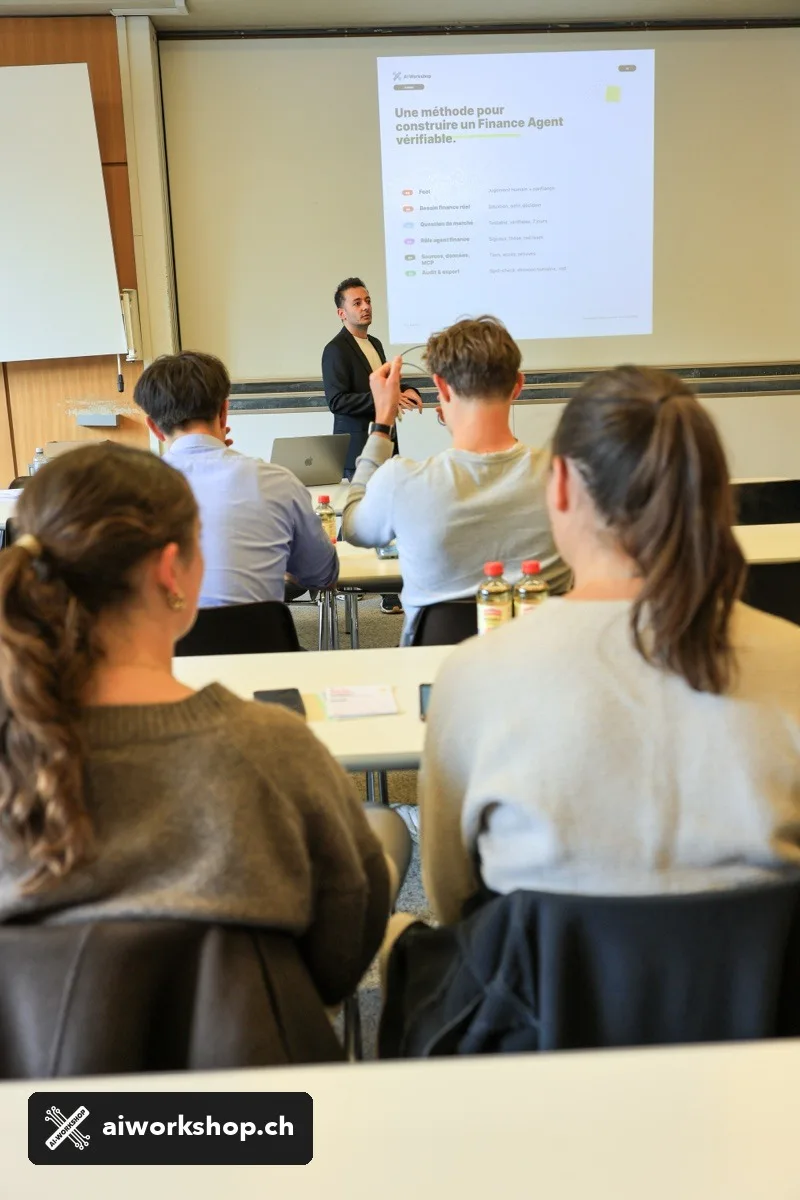
À l’UNIL à Lausanne, AI Workshop et Innovation Time Lausanne ont animé une session de 90 minutes sur l’IA agentique et la finance. Les étudiants ont structuré des briefs d’agents et discuté vérification et responsabilité humaine.
Preuve publiée · Suisse
Un atelier documenté, avec des livrables vérifiables.
À l’UNIL à Lausanne, un atelier de 90 minutes sur l’IA agentique et la finance a produit 18 spécifications d’agents structurées. L’étude de cas documente le public, la méthode, les supports et le portfolio public.
Il s’agit d’une preuve d’atelier en Suisse. Ce n’est pas une référence client locale en France, en Autriche, aux EAU ou en Arabie saoudite, ni une preuve de déploiement ou de résultat financier.
08 · Animé par un praticien
Animé par un praticien
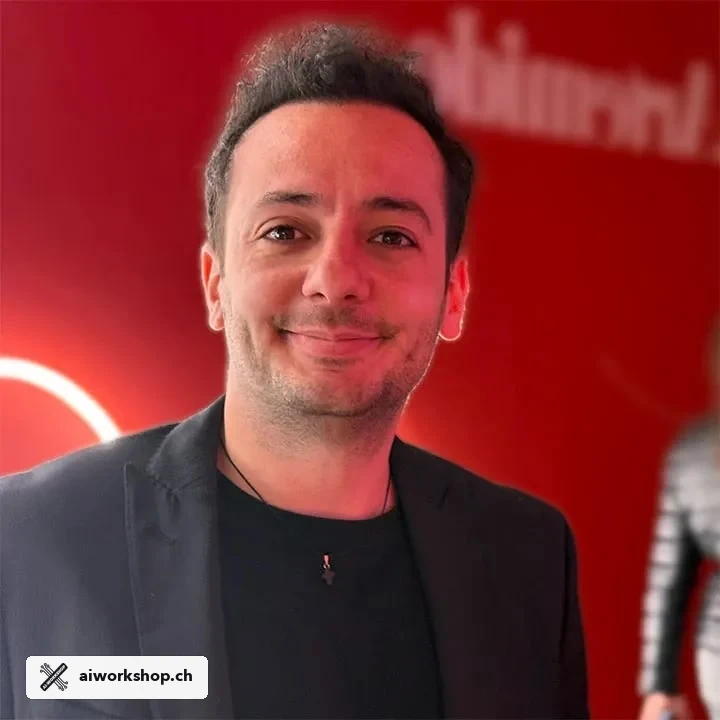
George Raymond Alchoufi associe ingénierie logicielle, facilitation et coaching exécutif. La session est adaptée au travail, aux outils approuvés et aux responsabilités de validation de votre équipe.
Contenu du programme vérifié en juillet 2026
Disponible dans toute la Suisse
Sur site à Zurich, Genève, Lausanne, Bâle, Berne et ailleurs en Suisse sur demande, avec un format hybride pour les équipes distribuées.
Poursuivre le parcours de votre équipe
Questions avant réservation
Que réalisera notre équipe dans l’atelier IA pour les universités ?
Donner à chaque public universitaire une manière pratique et responsable d’utiliser l’IA dans son travail. Les résultats pratiques sont : Choisir le parcours adapté à la cohorte ; Pratiquer des tâches liées aux rôles académiques ; Traiter intégrité, confidentialité et jugement humain ; Réutiliser guides et livrables après l’atelier.
À qui s’adresse l’atelier IA pour les universités ?
Universités, écoles, équipes de formation continue et communautés académiques qui préparent un apprentissage pratique pour une cohorte définie.
Quels outils les participants utiliseront-ils ?
La pratique inclut ChatGPT, Agent Design Canvas, Vos outils IA approuvés. Les exercices sont adaptés aux licences et systèmes approuvés par votre organisation.
Quelle est la durée et le mode de livraison ?
Le format recommandé est Atelier ciblé · 4 heures. Chaque atelier principal reste compris entre quatre et six heures ; les alternatives sont Atelier principal · 4–6 heures, Atelier principal et suivi optionnel. Choisissez une session en présentiel dans votre organisation ou dans un lieu convenu, un atelier entièrement en ligne ou un format hybride.
Quelle préparation est nécessaire ?
Aucun prérequis technique. Un court entretien sponsor et un questionnaire participant permettent d’adapter les exemples aux outils approuvés et à du travail non sensible.
Que conserve l’équipe après l’atelier ?
Le pack de travail comprend Cahier adapté au parcours, Guide d’usage responsable, Workflow ou brief d’agent adaptable, Plan d’étapes pour la cohorte, les ressources numériques et une synthèse concise du facilitateur.